Gumbo Stories: Celebrating the Spirit of Southern Comfort Food
The Cultural Significance of Gumbo
Gumbo represents Louisiana’s multicultural heritage perfectly. Each bowl tells stories of cultural exchange and adaptation. Families guard recipes through multiple generations. This dish embodies community, tradition, and creativity.
Origins & Etymology
The word gumbo derives from ki ngombo, meaning okra. West African languages contributed this terminology. Spanish, French, and Choctaw influences merged together. The dish evolved through centuries of cultural interaction.
Gumbo as Social Connector
Gumbo brings people together for celebrations and mourning. Large pots feed extended families and neighbors. Cooking gumbo requires time, patience, and attention. Sharing gumbo strengthens community bonds naturally.
Essential Components & Techniques
Every gumbo starts with specific foundational elements. Technique matters as much as ingredients. Regional variations reflect local preferences and availability.
Roux Making Mastery
Roux combines equal parts flour and oil. Color ranges from blonde to dark chocolate. Darker roux provides deeper, nuttier flavors. Constant stirring prevents burning during cooking.
Stock & Liquid Foundations
Seafood stock enhances seafood gumbo varieties. Chicken stock supports poultry and sausage versions. Water works when good stock isn’t available. Liquid ratios determine final consistency.
Thickening Agents & Methods
Okra releases mucilage that thickens naturally. Filé powder adds thickness when serving. Roux provides both flavor and thickening. Some gumbos combine multiple thickening methods.
Regional Gumbo Variations
Different Louisiana regions claim superior gumbo styles. Each variation reflects local history and resources. Arguments about authenticity continue passionately today.
Creole Gumbo Characteristics
Creole gumbo often includes tomatoes and okra. Seafood combinations feature shrimp, crab, and oysters. The roux tends toward medium brown. Trinity vegetables provide an aromatic foundation.
Cajun Gumbo Distinctions
Cajun gumbo typically excludes tomatoes entirely. Chicken and sausage combinations appear frequently. Dark roux provides signature flavor depth. Duck and other game meats appear seasonally.
Gumbo Z’herbes Tradition
Green gumbo appears during the Lenten season. Multiple greens create complex flavor profiles. Traditionally includes an odd number of greens. Meat-free versions accommodate religious observance.
Protein Selections & Combinations
Protein choices define gumbo character significantly. Traditional combinations follow established patterns. Modern interpretations experiment with new proteins.
Seafood Selections
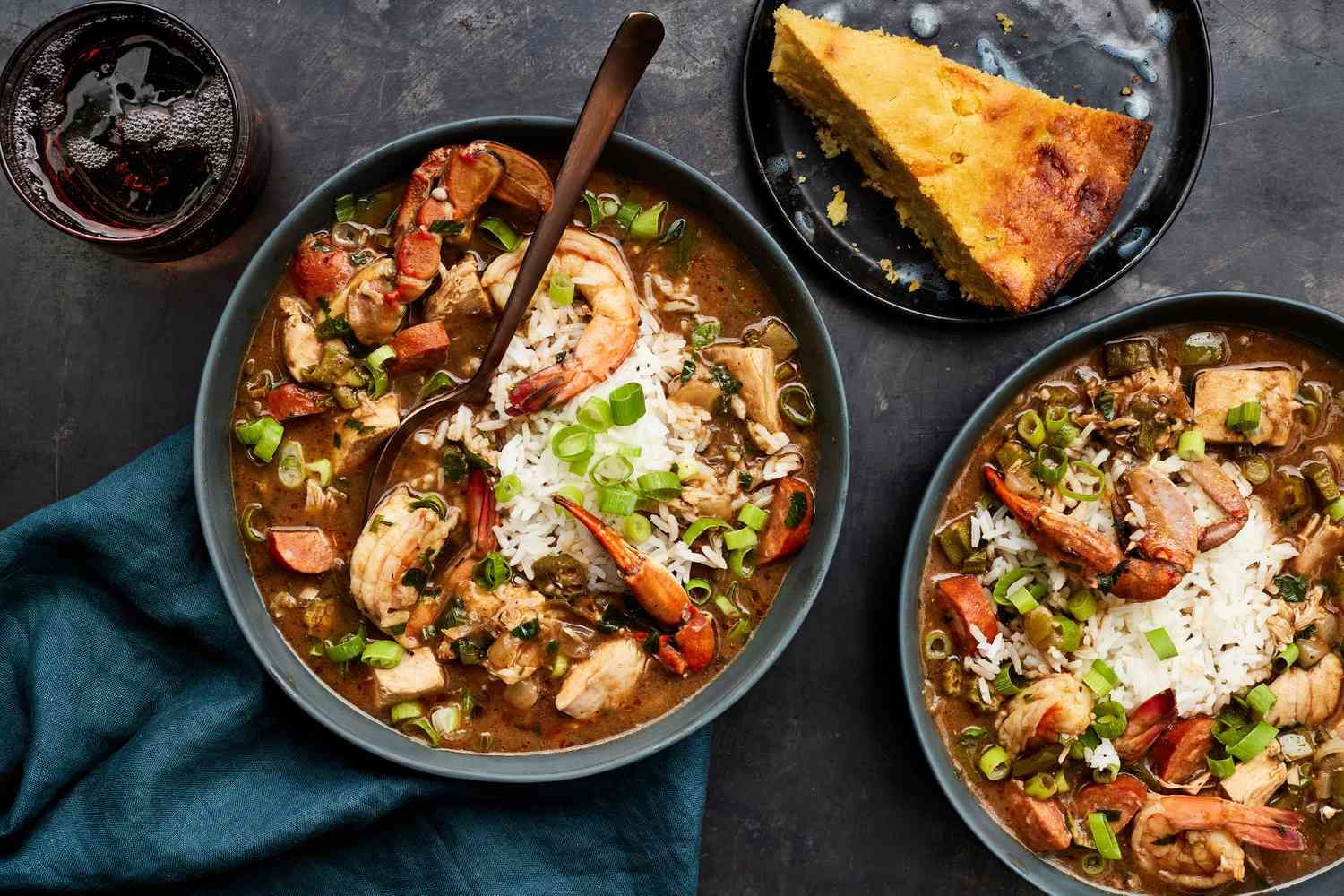
Gulf shrimp adds sweetness and texture. Crab meat provides delicate flavor notes. Oysters cook briefly to maintain texture. Crawfish appears when seasonally available.
Poultry & Sausage
Chicken provides an economical protein base. Andouille sausage adds smoky spice elements. Duck offers a rich, gamey flavor. Turkey substitutes work after holidays.
Alternative Proteins
Alligators appear in certain regional preparations. Turtle soup borders on gumbo territory. Rabbit and squirrel reflect rural traditions. Vegetarian versions gain modern popularity.
Serving Traditions & Accompaniments
Gumbo service follows established customs. Accompaniments enhance but shouldn’t overshadow. Presentation matters for special occasions.
Rice Preparation & Service
Medium-grain rice holds up to liquid. Rice goes in bowls before gumbo. Some prefer rice on the side. Proper rice texture matters significantly.
Potato Salad Addition
Germans introduced potato salad to gumbo. The combination seems odd but works well. Cool potato salad contrasts hot gumbo. Not everyone embraces this tradition.
Condiments & Garnishes
Hot sauce bottles appear on tables. Green onions provide fresh contrast. Parsley adds color and freshness. Filé powder shakers allow personal preference.
Seasonal & Occasion Gumbos
Different seasons call for different gumbos. Special occasions warrant specific preparations. Holiday gumbos become family traditions.
Cold Weather Gumbos
Duck gumbo marks hunting season arrival. Heavy, dark-roux versions of warm winter nights. Chicken and sausage provides comfort food. Multiple-protein gumbos feed holiday crowds.
Summer Seafood Versions
Lighter seafood gumbos suit hot weather. Okra gumbo takes advantage of garden produce. Crab and shrimp celebrate Gulf seasons. Outdoor cooking keeps kitchens cool.
Social Aspects & Community Building
Gumbo preparation encourages group participation. Teaching gumbo-making passes down culture. Community gumbo dinners raise funds and spirits.
Family Recipe Preservation
Grandmothers teach through demonstration, not recipes. Family members guard secret ingredients jealously. Recipe variations identify family branches. Written recipes capture oral traditions imperfectly.
Church & Social Functions
Church fairs feature competing gumbo vendors. Fundraiser dinners center around gumbo service. Funeral gatherings include gumbo for mourners. Wedding receptions might feature gumbo stations.
Modern Gumbo Evolution
Contemporary chefs respect tradition while innovating. Gumbo appears on menus worldwide now. Home cooks experiment with ingredients and techniques. Social media spreads gumbo knowledge globally.
Gumbo cook-offs attract competitive cooks annually. Food trucks serve gumbo to new audiences. Instant pot methods speed preparation time. Gluten-free roux accommodates dietary restrictions. International fusion creates gumbo variations. Meal kit services include gumbo options. Restaurant chains attempt mass production. Frozen gumbo enters grocery stores. Despite modernization, traditional gumbo endures in home kitchens and local restaurants throughout Louisiana and beyond.